The Latest section highlights our most recently published review before it is archived in the Catalog, offering readers immediate access to our newest critical analysis.
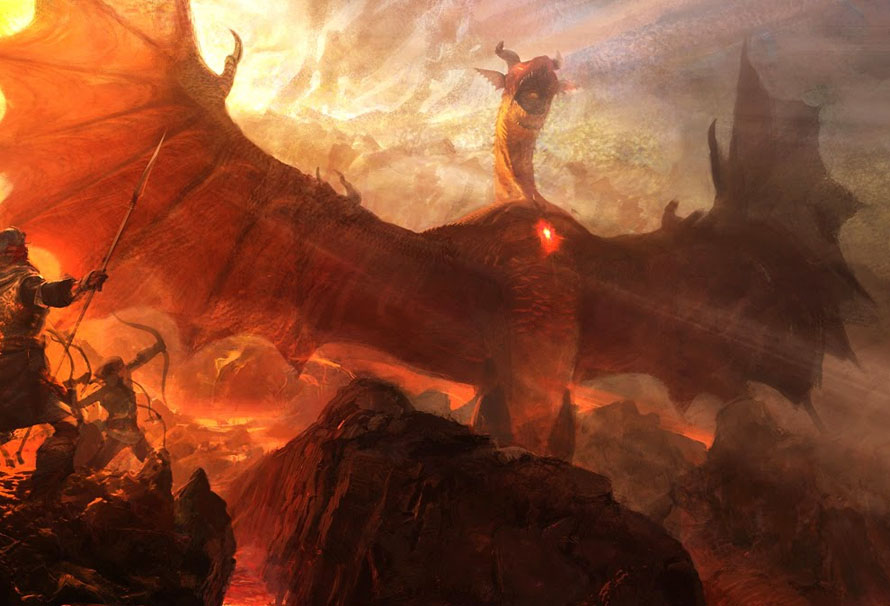
Dragon’s Dogma: Dark Arisen
31 Hours, 28/59 Achievements
B.A.L.D Score: 8.25/10
Balance: 8/10 -Positives dominate, with some exceptions
Agency: 7/10 – I appreciate the ambition, but it leads to frustration and confusion.
Legitimacy: 10/10 – All is well.
Design: 8/10 – Always a good theme and well executed, but can feel a bit lacking in spots.
As my first professional review I decided to grab Dragon’s Dogma: Dark Arisen. My goal isn’t to tell you what to think, it’s to give you the perspective of an average gamer playing a game for the first time. I’m sure I didn’t get to experience a large chunk of the content. I played for 31 hours before beating it, and got 28 of the 59 Achievements on Steam.
Few action RPGs have built a reputation as strangely resilient as Dragon’s Dogma. It has grown from a cult curiosity into one of the most frequently recommended “hidden gems” in the genre. Years later, it remains both deeply flawed and uniquely compelling — a game whose strengths are so strong that they often overshadow its shortcomings.
Set in the medieval fantasy land of Gransys, Dragon’s Dogma opens with a striking premise: Your heart is stolen by the dragon Grigori — the name being reference to fallen angels that were tasked with guarding humanity but became corrupted — and are marked by it as the Arisen, an opposing force that it chose as its future adversary. The narrative framework is simple: Kill Grigori and reclaim your heart.
So, let’s get into the B.A.L.D. scoring.
Balance: How does the game feel to play?
This is where most games live or die, and largely this game lives well.
The Good: Melee combat feels fluid and weighty. The combat system of using light/heavy attacks and toggling the skill wheel to use abilities feel good. Being able to climb onto larger enemies to break off parts of them or knock them over feels good. The initial boss in the prologue felt overwhelming and I had little instruction, so it was a bit of a struggle, but figuring out that I can climb it and attack it more directly was a gamechanger. Sometimes letting the player figure out a mechanic by testing the buttons themself can feel very rewarding. Big, strong enemies feel big and strong. Boss design, although there wasn’t a huge variation in bosses, felt well done for what they did have, other than Griffins.
The Bad: Archery combat felt harshly lacking in effectiveness. Stamina regeneration is painfully slow. The constant armor clanking every 4 steps got very old very fast. Not having lock-on or dodge rolls feels bad for this genre of game.
My Experience: I’m normally not normally a fan of a game starting with a fully kitted character and then stripping all your stuff away, but for this game they made it make sense at the end. At the time though, it felt jarring like I had missed a few hours of context. You start off playing as a character named Savan, who is a Fighter vocation (class). After the prologue, you’re given a new character to build up from nothing and start in your hometown of Cassardis. I chose to start as a Fighter since it felt good. At level 14 I found that I could change my vocation, so I switched to Magick Archer to give ranged combat a go. It did not go well. I bought the best bow that was unlocked, got the best gear, and enchanted it as much as I could. However, testing it on the bandits just outside the capital city of Gran Soren showed that I was doing hardly any damage at all. I decided to stick with it, maybe it would get better. I took an escort quest and on the trip I was obliterated because I couldn’t hardly hurt anything and I was always out of stamina. The game reloaded to my last save, which happened to be at the inn right before I switched vocations, so I chose to lean into heavy melee damage and picked the Warrior. The fighter felt good, but I found myself never using the shield and just spamming the gap closer attack. The Warrior was less fluid but I felt like I was making more use of the whole vocation. The big, heavy, charge attacks felt good to knock down and kill large enemies in 2-3 hits. The warrior didn’t have any ranged options, but my pawns did so I rarely felt like I needed it.
Combat peaks, of course, against the bosses. The Hydra was pretty cool, climbing it to cut off the head was fun. The Cockatrice was a good fight, it was the first time I encountered petrification and one of my pawns fully died. The Evil Eye was cool looking and cutting the eye stalks off was satisfying. The giant cyclops were simple but still a threat. The liches summoning skeletons was interesting but easy to deal with. The griffins, however, were very annoying since they spent 99% of their time in the air and I kept forgetting to grab them to hit their wings. The Dragon fight at the end felt very cinematic, running through collapsing halls, towers, walls, and then onto Grigori’s back and taken across the country before the last encounter in an arena. I do feel like I accidently rushed to the end of the game though. After taking time and doing every side quest I found, I eventually made it to the second encounter with Grigori after chasing down a cult leader. After the encounter, I roamed the fort a bit and went down some stairs and through a door, which then triggered the final battle quest. I pressed forward, and Grigori was letting some goblins push around a witch girl named Selene that I had rescued earlier in the game.
After the fight, she is happy to be rescued again. Very… happy… and I felt like I was missing some context. Another woman, Mercedes, left after being shamed in a dual and vowed to return, but I never saw her again. I found a spell book for some guy and gave it to him instead of using it and much later on he turned up again and helped with the Griffin boss fight using the book, which was really cool to see. I helped a guy named Mason by clearing out a cult location, but I left one of the defenseless cultists to live so he broke ties with me. It felt like he was supposed to be an important character with a story line, but he really only made a very brief appearance. More happens later and there is a huge world-changing twist, but I’ll leave that for other new players to experience.
Agency: How well can the player interact with the world and systems?
This game has tons of things to interact with, but not all of it is really welcome.
The Good: Climbing larger enemies. Grabbing and throwing objects and people. The Pawn system. Switching vocations. The fast travel system. The side quests and quest boards.
The Bad: Stamina system. Exploration regret. Crafting.
My Experience: Fresh from the prologue, the first thing I do is see if I can attack a villager. I can, and they run away. Check. I do some exploring and return with materials to try out some crafting. The crafting system in this game is horrendous. I’m okay with being told that something heals “some” or “more” instead of giving a number. That fits the feel of the game. However, not having any kind of recipe list or sorting menu really feels bad when I’m trying to figure out what I can make. I’m happy to test out unknown recipes, but after I unlock one the system really would have benefited from a menu list of currently craftable items. If there were less ingredients, and not hundreds, then this would have been more manageable, but I was clicking on every item to see what I can make with it which soaked a lot of time.
After making it to the second area, The Encampment, I was introduced to the Skill system which was pretty nice. Each vocation has its own skills, which change depending on the type of weapon you have equipped, and its own core skills and augments that you can unlock as you level the vocation. Eventually I also found that unlocked augments stay with a character even after changing vocations, which encourages me to level others, which feels good to invest in. I only ended up leveling Fighter, Warrior, and Assassin before finishing the game though.
The Pawn system is the core of this game’s identity. Pawns are humanoid entities that rely on humans to lead them. You are given a customizable Pawn to serve as your permanent companion, then you can choose 2 more pawns to join you that other players have created and put time into. You get to change your own Pawn’s vocation and gear, and it levels with you, but the other Pawns you hire are locked in their level and gear. This actually works well with the theme of Pawns being “other” since they have no attachment or preference other than to do what you need, and frequently what you need them to do it leave so you can hire better ones. I felt like a good team balance was me as a Fighter/Warrior, my main pawn as a support Mage, and my other pawns as dps Sorcerer and dps Strider.
Climbing larger enemies was a struggle. The system is good in concept, and it works, but it’s difficult to get where you want to go and you’re frequently knocked off from stamina loss before you can do anything. Throwing objects and people is interesting, but I personally barely interacted with it. The fast travel system was vastly improved with the permanent ferrystone that came from the DLC. There are a couple locations you can fast travel to using rare consumable ferrystones, and you can place new fast travel locations using portcrystals. This system is all well and good, but regular ferrystones seemed so rare that I would barely use them.
The stamina system is also very limiting. In safe zones, stamina is unlimited and you can sprint forever and test the look of your skills. Out in the world, you burn through stamina in 5 seconds of sprinting and it takes 30 seconds to regain it back. This is one of those artificial limitations that beg the question, “How is this a good experience for the player?”. Just make sprinting outside of combat not consume stamina. I appreciate the slow regeneration to limit ability spamming, but it really takes a heavy toll on traveling and slows it down a lot.
The quest board tasks can mostly be taken without reading them, you’ll naturally complete them when you’re traveling because it’s mostly just “kill 10 of this thing” and there doesn’t seem to be a limit to how many quests you can have active. Exploration outside of quests also seems to be disadvantageous. Frequently, I would clear out an area during travel only to be asked to go to that area and clear it again. It created a lot of back and forth to the same places.
Legitimacy: Does this game feel genuinely made, or influenced by negative sources?
The Good: This game feels like it is what it wanted to be. There is no sense of box checking or design-by-committee red flags. They didn’t get bullied into shoehorning in a virtue signaling narrative. Also, there are no microtransactions as this is a single player game. I didn’t get to explore the DLC much, but quality DLC is usually welcomed by fans. This game commits to a brutal stamina economy, harsh punishments, unclear progression goals, and building up a story with an amazing twist at the end.
The Bad: I saw no signs of outside influence, trend-chasing, or diluted vision. The game feels like a product of conviction.
Design: How well does the game execute its chosen art style and theme?
The Good: For its time, it looks good. Not cutting edge, but the strong theme carries it. None of the armor designs really stood out, other than the Griffin set looking very cool with the feathers. The cinematics are epic and well made. The mythic tone remains constant. The game understands its scale, and it understands its spectacle. The music is also very nice and sets the tone well. The intro music is especially very good.
The Bad: The story was hard to understand at times, and things would happen with no explanation. The enemy variety could have been more diverse. Black wolves, white wolves, grey wolves, they’re all just wolves. Goblins, goblins with a shield, goblins with slightly higher health, they’re all just goblins. This is more of a critique than a complaint, but it did feel pretty repetitive for how often you were running into enemies.
 Asmongame